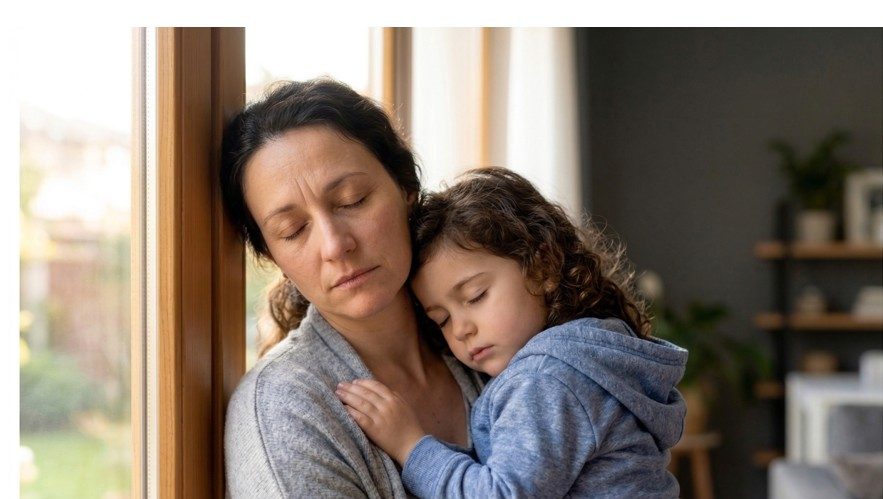
Ever since Rett syndrome entered our lives, I have noticed something that I never saw before. I see disability everywhere now – in stories online, in support groups, in comments from strangers who think they are offering comfort.
And one phrase keeps appearing over and over again:
“It’s a blessing.”
“Thank God” or “Jesus, Thank You” or whatever deity “.. Thank you”
“This is your gateway to heaven.”
I read those words, and I wonder – what exactly am I supposed to be thankful for?
Rett syndrome did not bless my family. It shattered our lives.
It stole the future we imagined for our daughter. It took away skills she once had – words, play, independence – and replaced them with struggle, uncertainty, and constant medical needs. It left her with a life filled with limitations that she never chose, and pain that she cannot even fully explain or react to.
When people tell me to be grateful, I struggle to understand what they mean.
Am I supposed to thank God for the nights without sleep?
For the hospital visits?
For the therapies, the waiting lists, the fear of what comes next?
Am I supposed to be thankful for watching my child work ten times harder than other children just to do the simplest things?
This diagnosis did not just affect my daughter – it changed every corner of our lives.
I lost professional opportunities because caregiving comes first. There are jobs I could not accept, meetings I could not attend, chances that slipped away because my child needed me. Our schedules revolve around therapy, appointments, medications, and the unpredictable realities of this condition.
I was labeled as “toxic” and “petty” by other moms whose daughters share the same condition, simply because I refuse to accept the destiny that God supposedly assigned to my daughter. I am fighting to change her life, and not to accept suffering as inevitable.
We cannot leave the house freely the way we once did. Simple outings require planning, equipment, and energy that most people never have to think about. And if we do go out, it often comes with stares, questions, or whispers.
My own health has deteriorated. I have become more anxious, less tolerant, more stressed, and constantly exhausted. The weight of fear, responsibility, and uncertainty does not stay contained within hospital walls; it follows me everywhere, into every thought, every decision, every sleepless night.
Financially, the weight is relentless. Medical bills pile up. Therapies cost money. Specialized equipment costs money. And while we work harder than ever to make ends meet, the expenses never seem to stop.
What hurts just as much is the way society reacts.
Some people look at us with pity. Others ask intrusive questions out of curiosity disguised as concern. And sometimes, there’s an unspoken feeling – Relief that this happened to us instead of them.
You see it in their eyes, and sometimes they even say it out loud to our faces:
“Thank God it’s not my child.”
“I can’t imagine it happening to my toddler.”
Often accompanied by “thank God” statements – “alhamdulillah,” and similar expressions.
My first impulsive thought is always…
So, God was able to spare your child, but not mine? Why? Does your child deserve the chance to live, jump, and talk – while mine does not?
But my husband often reminds me to keep those thoughts to myself. And maybe that’s the hardest part.
Not the diagnosis itself, but the isolation that follows. I am writing this because honesty matters.
There may be beauty in resilience. There may be strength in survival. There may be love deeper than words in families like ours.
But suffering is not automatically a blessing. Pain is not automatically holy. And disability is not something that needs to be romanticized to make others feel comfortable.
What families like mine need is not pity.
Not platitudes.
Not forced gratitude.
We need understanding.
We need real, physical support.
We do not need to be dismissed or mocked by funding bodies or by those we turn to for help.
We need real help, beyond the occasional curious people who pretend to care just to get the latest gossip.
We need medical professionals and treatment companies to honour their words and keep their promises. We need to be treated like human beings – not like cash cows.
We need access to treatments, therapies, and systems that allow our children to live with dignity and not just survive.
If there is anything worth being thankful for, it is not the disease.
It is the strength our children show every single day.
It is the courage it takes to stand up and fight.
It is the determination to keep fighting for them, even when the world calls it petty or useless.
Because sometimes, the bravest thing a parent can say is:
This is not a blessing.
This is a battle.
And we are still fighting.
I took a decision 3 years ago, that I will not allow myself to enjoy life as long as my baby cannot enjoy hers. And, I will not give up until the day I die.
So, If this is supposed to be a “gateway to heaven,” then cancel my ticket.
I would rather my daughter live, play, laugh, and dance here on earth than trade her life for promises of paradise.
Cancel my ticket to heaven and help me give my daughter her life back.
~ Rana Vaccaro – Lucia’s Mom and Personal Fighter

 Cure Rett Canada
Leave a comment